

Discover Products, Get Discovered.
Individuals find the right products. Businesses reach the right audience. One platform, free for both.
Individuals find the right products. Businesses reach the right audience. One platform, free for both.
How payment at a small barbecue spot in San Francisco laid the foundation for Yoco in South Africa.


In 2012, a childhood friend took Katlego Maphai to a small barbecue spot in San Francisco.
There was no till on the counter. It was the kind of place he assumed was cash only.
When his friend went to pay, the woman behind the counter pulled out an old Android phone with a little white card reader plugged into the bottom. She swiped the card, and Katlego's friend signed with his finger.
It was a done deal...and that was the moment everything changed for Katlego Maphai.
Maphai had seen the tech before. But watching a tiny business take a card with nothing but a phone and a dongle, something clicked for him. Back home in South Africa, 27 million people carried bank cards, but only 6% of sellers could accept them.
Katlego Maphai saw the gap. Then he spent the next decade closing it.
Katlego Maphai never wanted to build Yoco alone. That was the rule from day one.
He pulled in three people he trusted:
Carl Wazen, who he met consulting at Delta Partners and made a pact with on a Cape Town holiday
"I wanted to work with my friends," he said. Simple as that.
Building Yoco wasn't simple though. South Africa's payment system was bank-led and not made for startups. It took a year just to get a license. Another year to build and certify the product. Another year in beta. People told them they were crazy.
The first transaction on Yoco finally went through in October 2014.
Then it went BIG.
By 2021, Yoco raised R1.23 billion in one round, the largest a South African payments company had ever pulled in. Today Yoco serves around 200,000 businesses, moves over R34 billion a year, and employs close to 400 people.
That card machine you tap at a market stall, a salon, or a coffee cart in South Africa... a lot of the time, that's Yoco.
Yoco's product was clever, but the mission was much bigger.
Before Yoco, a vendor running on cash and a notebook barely existed on paper. No card payments, no transaction record, no credit history, no real way into the formal economy.
Katlego Maphai put it plainly: small businesses are not just part of the economy, they are the economy.
So Yoco built for them on purpose. No branch visit, contract, or trading history needed. Pay as you go, with a card machine you could buy off a shelf at Makro or Builders Warehouse. Then came Yoco Capital, so merchants could borrow against their own sales and grow.
Maphai wasn't selling hardware. He was selling access.
Every merchant who accepted a card for the first time stepped onto a digital trail. That trail could turn into a loan, a record, a reason for a bank to finally take them seriously. He took businesses that the system ignored and made them count.
When Fast Company SA wanted to put Yoco on its cover, Maphai pushed back. Not on the cover... on being on it alone. He wanted all four founders up there with him.
That wasn't modesty for show, but shared leadership on purpose. His thinking: augment strengths with strengths, and let a strong team outperform any single person in it.
Maphai was also honest about the cost in a way most founders aren't. He had no time for the glossy version of entrepreneurship that sells the wins and hides the rest. Building something real, he said, takes all of you. The personal sacrifice is the part nobody warns you about.
That honesty is rare, and it's why people across the continent trusted him.
In September 2025, after more than ten years, Maphai stepped down as CEO by choice.
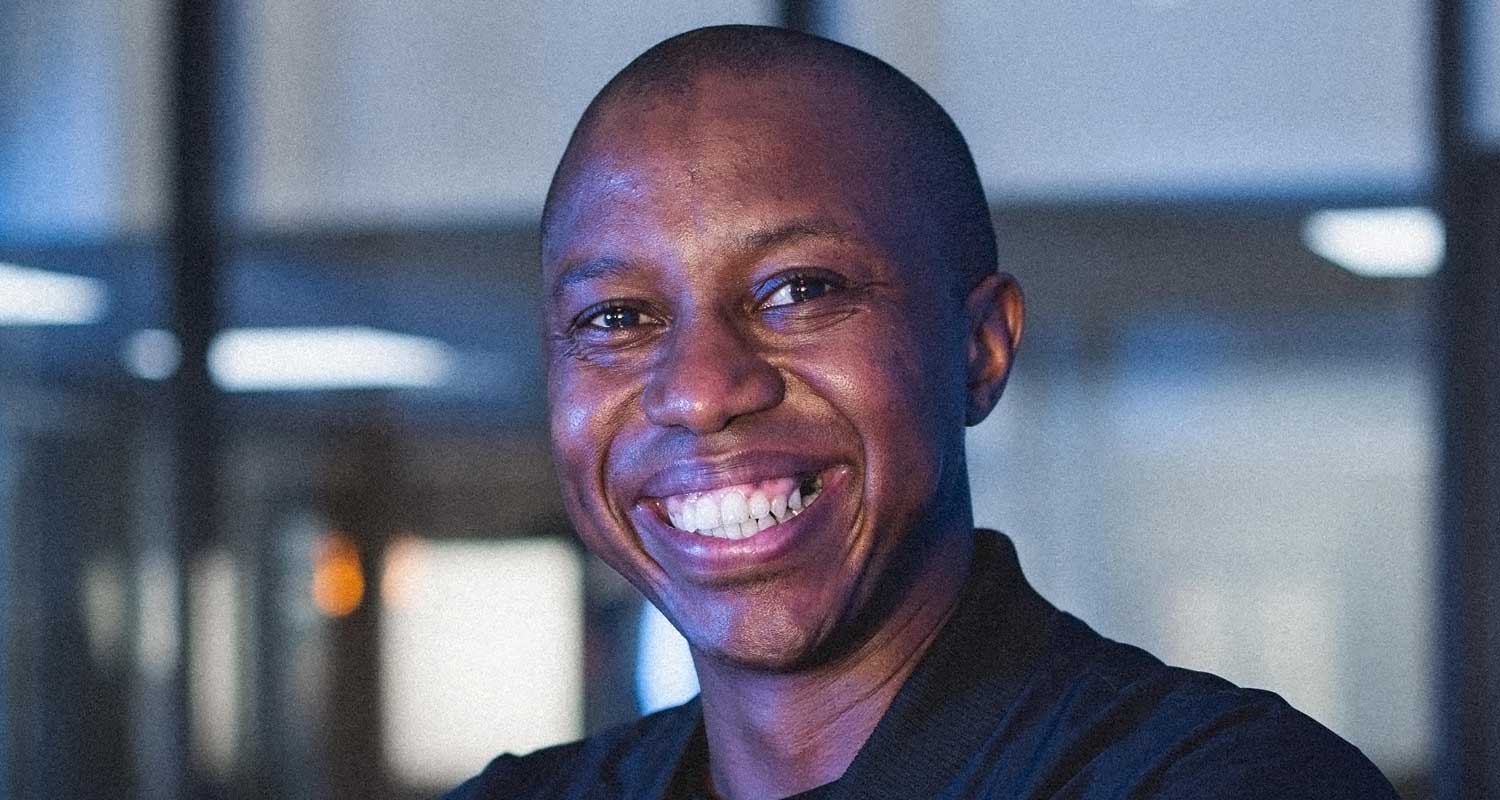
His reasoning was clean: the skills to start a company are not always the ones it takes to scale it. So he handed the company back to the same friends he started with. Matshoba and Wattrus stepped up as co-CEOs, Wazen kept leading commercial, and Maphai stayed on as a founder working on the long game.
Knowing when to pass the baton is its own kind of leadership.
Most founders never learn it. Maphai did it on his own terms, with the company still climbing.
An African founder built category-defining tech for an African problem, and won.
Katlego Maphai is one name. There are hundreds more now. Paystack and Flutterwave in payments. M-KOPA in financing. M-Pesa rewriting money itself. Builders across Nigeria, Kenya, South Africa, Ghana, and Egypt solving problems global platforms never bothered to look at.
The African tech ecosystem got big.
Big enough that a new problem showed up: with thousands of products out there, how does anyone find the right one, or even know it exists?
That's the gap Liners fills. It's the lineup of every software product built for Africa, with reviews and alternatives sorted by country and sector, so a founder in Lagos or a business owner in Nairobi can find tools made for their reality.
Yoco made one street vendor visible to the economy. Liners is making Africa's tech visible to the world. The work that founders like Maphai started, needs a place to be seen, compared, and chosen.

Chief Content Editor
Adepeju Toromade is Chief Content Editor at Liners and holds final sign-off on every guide, comparison, and explainer published on the platform. She enforces a source-first editorial standard, where product claims, pricing, regulatory positioning, and market data are traced to primary documentation before they go live. Her bylined work applies the same bar she sets across Liners' coverage of African software.


 Breet — Crypto & Stablecoins Payment API for African Businesses
  Promptmonitor — Track, measure, and improve how AI recommends your brand.
 Promptmonitor