

Discover Products, Get Discovered.
Individuals find the right products. Businesses reach the right audience. One platform, free for both.
Individuals find the right products. Businesses reach the right audience. One platform, free for both.
How a pilot from the United States stumbled into entrepreneurship and built a financing system for small business owners in Kenya. Here's the Zanifu story.


Walk into any part of Nairobi and you'll find her.
The woman who runs the duka on the corner. She sells you airtime, sugar, soap, a cold soda, and sometimes chapati. She moves stock every single day, and by every honest measure, she is a business.
Now walk into a bank and ask them to lend her money.
They might laugh. They'll say she has no collateral, audited books, or payslip. They'll say she has no credit history they can read.
She is too small to matter and too "informal" to trust.
That gap, between a woman who clearly works and a system that refuses to see her, is the whole reason Zanifu exists. And the two men who built it didn't come from banking at all.
One of them used to fly planes.
Steve Biko and Sebastian Mithika are the kind of founders who consistently solve one problem.
They both worked at Kopo Kopo, a company building mobile-money tools for small businesses in Kenya. Biko ran sales and engagement while Mithika built product.
Staying that close to thousands of small shops, Steve Biko and Sebastian Mithika started to see a recurring pattern: these businesses were failing because they'd run out of stock and no one fronts them goods to keep selling.
In 2017, both founders left Kopo Kopo to fix the issue themselves. Lending began in 2018, and they called it Zanifu.
Biko grew up in Kenya, then moved to the United States at 16. He studied aviation at the University of Maryland Eastern Shore and became a licensed pilot. Roughly after a decade in the States, he decided to come home.
On getting back home in Kenya, Biko's first job was sales at a tech startup called Kopo Kopo, where he rolled out M-PESA to small businesses.
Day to day, that meant knocking on doors and meeting shop owners across Nairobi. It's where he first saw the problem Zanifu would later exist to solve: good businesses leaving money on the table, unable to grow because nobody would lend to them.
Steve Biko met his cofounder, Sebastian Mithika, at Kopo Kopo. "Meeting every time we have time," is how he describes those early days.
That is where, in his words, he "stumbled into entrepreneurship."
After M-PESA came Kopo Kopo, then Sendy, where Steve Biko rose to Country Manager for enterprise business. Sales, operations, logistics, payments. Biko had the exact toolkit to lend money to people banks won't.
The surprising thing is...Zanifu doesn't hand out cash.
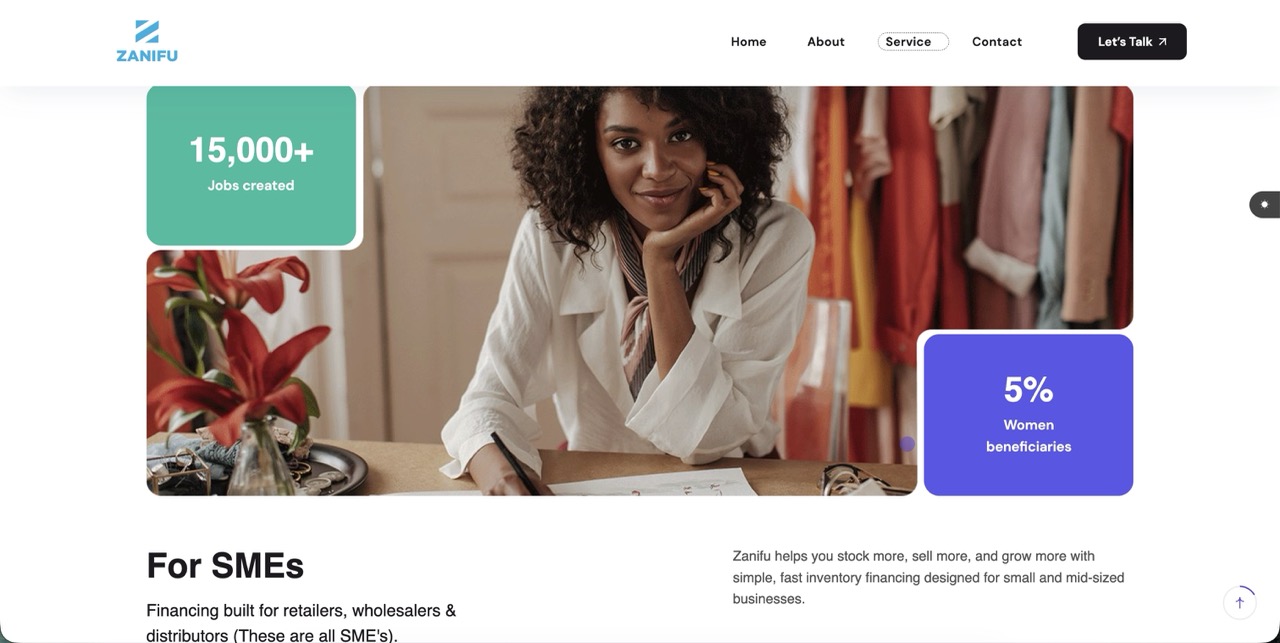
Cash to a struggling shop owner often goes into rent, school fees, or a sick relative. So Zanifu lends stock instead.
The Zanifu credit goes straight to the distributor, who delivers goods to the shop. The shopkeeper sells, then repays in about 30 days through mobile money. Paying the supplier directly removes a huge chunk of the risk.
A retailer gets scored by an algorithm within six hours of signing up on the app, using their purchase history and supplier data. There's no loan officer or weeks of waiting.
Zanifu credit tickets run from $200 to $500 in stock for small shops, and up to $10,000 for distributors. Shops using Zanifu have grown their turnover by more than 40%, and with a repayment rate of 99.2%.
And it's all regulated; Zanifu holds a licence from the Central Bank of Kenya.
Personally, here's a part that makes me respect Zanifu and its founders.
In 2022, Zanifu was talking about expanding into Ghana and Uganda. New flags, new markets, the kind of story investors clap for.
Then in 2023, they did the opposite. They postponed the expansion and chose to go deep in Kenya instead, with one stated goal: get the lending capital to generate returns for these shops, and get Zanifu itself to profitability first.
"We will go to other markets once we get to profitability," Biko said. In a sector built on burning money to look big, that line is almost rebellious.
Call it a retreat, but it was a good one.
The numbers grew anyway. By 2025 Zanifu had deployed more than $60 million in credit to over 15,000 businesses. All while posting its first two straight months of breakeven.
Only after that did they take the $11.2million funding from Yango Ventures to expand again.
Build it right. Prove it works. Then grow...that was the order for Zanifu.
On the Beyond Capital Podcast, Steve Biko said the biggest problem with Africa as an economy is simple: "it's young."
Most countries here only got independence between 1930 and 1980, often into the hands of rulers who weren't ready for it. Today, the institutions are still being built. He doesn't say that bitterly though, but like a man who sees the opportunity ahead.
When he explains why M-PESA worked, he used the Swiss cheese model -the idea that big things only happen when a lot of separate gaps line up at the same time:
For Biko, M-PESA was a real revolution: anyone in Kenya, rich or poor, could finally send money with a text message and with no internet connection.
When the podcast asked what gives him hope to keep going, Biko quotes; "any day above ground is a good day." And if he'll every change anything, it'll be advising his younger self to do an MBA and learn finance.
"You're already late. You should have started yesterday, because time is king. "
Steve Biko and Sebastian Mithika understood something many founders miss - you don't change Africa by "copying Silicon Valley."
You change it by looking hard at the woman (or man) on the corner, asking why the system fails them, and building the one thing that fixes it.
And this is exactly why Liners exists.
For too long, finding the real builders behind African software meant relying on rumor, a friend's recommendation, or whoever had the most "views" online.
Liners exists to let anyone discover, compare and understand the software being built across African fintech, health, agriculture and logistics, backed by real information.
Steve Biko and Sebastian Mithika built a company worth knowing. The least we can do is make it easy to find.
The next great African company is probably being built right now by someone you've never heard of, solving a problem the rest of us walked past. Zanifu was one of them, and we at Liners will find the next one before the headlines do.

Chief Content Editor
Adepeju Toromade is Chief Content Editor at Liners and holds final sign-off on every guide, comparison, and explainer published on the platform. She enforces a source-first editorial standard, where product claims, pricing, regulatory positioning, and market data are traced to primary documentation before they go live. Her bylined work applies the same bar she sets across Liners' coverage of African software.


 Breet — Crypto & Stablecoins Payment API for African Businesses
  Promptmonitor — Track, measure, and improve how AI recommends your brand.
 Promptmonitor