

/Graveyard/Kune Food
Kune Food
Food delivery service.
Epitaph
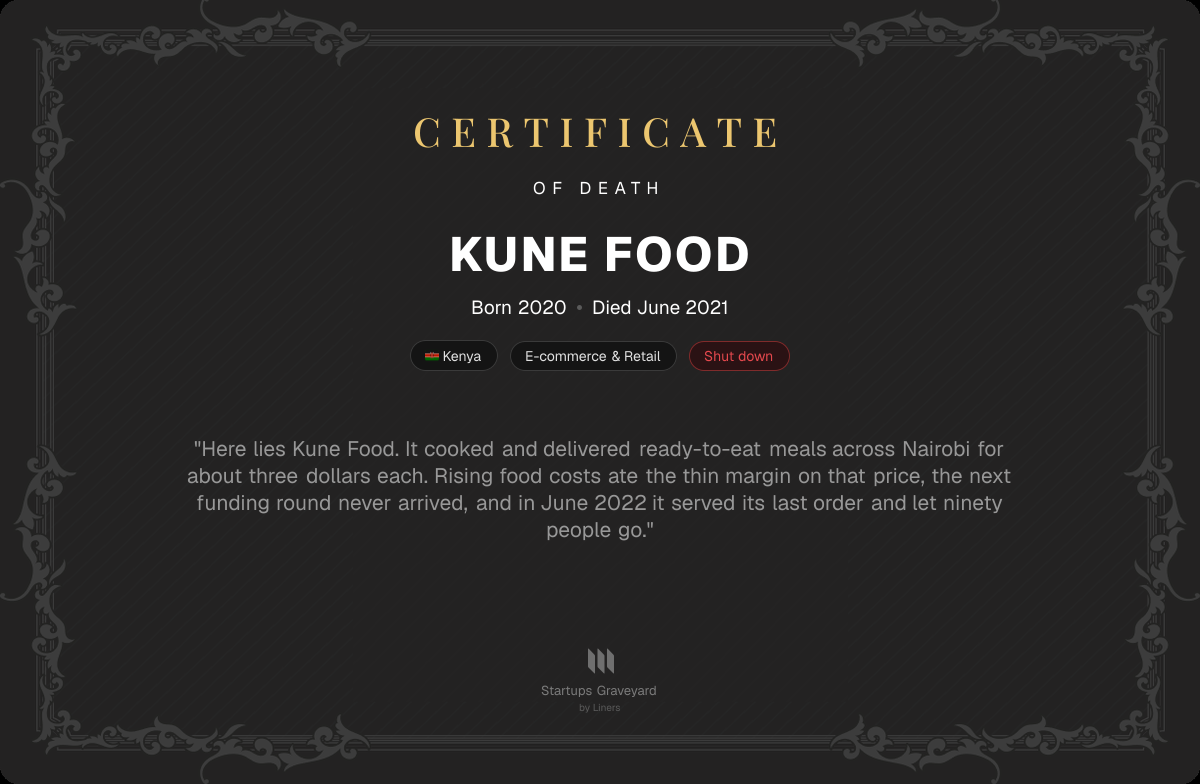
“Here lies Kune Food. It cooked and delivered ready-to-eat meals across Nairobi for about three dollars each. Rising food costs ate the thin margin on that price, the next funding round never arrived, and in June 2022 it served its last order and let ninety people go.”
Overview
- Born
- 2020 (Year)
- Died
- June 2021 (Month)
- Lifespan
- 17 months
- Fate
- Shut down
- Headquarters
- 🇰🇪 Kenya
- Category
- E-commerce & Retail, Quick Commerce
- Stage at death
- Pre-seed
- Primary cause
- Funding or runway
- Contributing causes
- Business model or unit economics, Pricing, External shock
Death certificate
Timeline
- December 2020Founding
Robin Reecht founds Kune Food after a November 2020 trip to Kenya
- June 2021Pre-seed round
Raises $1M led by Launch Africa Ventures, Century Oak Capital, and Consonance
- June 2021Backlash
Reecht's comments on Kenyan food affordability spark public criticism
- February 2022Commercial launch
Expands meal centers across Nairobi
- 22 June 2022Shutdown
Ceases operations after failing to raise a follow-on round, laying off ~90 staff
Autopsy report
Why did Kune Food shut down?
Kune Food, a Nairobi ready-meal delivery startup founded by Robin Reecht in December 2020, shut down on June 22, 2022 (roughly a year after full commercial launch, not June 2021 as some records show) after it could not close a follow-on funding round amid a tightening 2022 investment market, while rising food costs eroded margins on its low $3-per-meal price point.
What Kune Food attempted
Kune tried to deliver affordable (~$3), ready-to-eat meals across Nairobi from centralized meal centers, with plans to expand nationwide by 2024.
What worked
Raised $1M pre-seed (June 2021) led by Launch Africa Ventures, with Century Oak Capital GmbH and Consonance; sold 55,000+ meals to 6,000+ individual customers and 100 corporate customers.
Early warning signs
2021 backlash after founder Robin Reecht's comments implying Kenya lacked affordable meals were seen as tone-deaf/reflecting founder privilege; company struggled to close a follow-on round through 2022.
What happened
After full commercial launch in early 2022, Kune expanded meal centers around Nairobi, but rising food costs cut into margins on its already-thin $3 price point; unable to raise a next round in the tightening 2022 VC market, it shut down on June 22, 2022, laying off about 90 employees.
Lessons for future builders
- Pricing at the edge of affordability leaves no margin to absorb rising input costs, so the model quietly runs on fundraising instead of sales. Prove the unit economics work at real food prices before scaling, and price for margin, not just adoption.
Your verdict
Was this shutdown inevitable?
Be the first to weigh in
Community opinion, not Liners' editorial conclusion.
Sources
- A Recipe for Failure? Inside Kune Food's Sudden Closure TechCabal · 22 June 2022
- Kune Food shuts down barely a year after starting Kenya operations TechCrunch · 22 June 2022
- Food-tech startup Kune shuts down operations in Kenya after 10 months Citizen Digital · 23 June 2022
- Nobody is shocked that this Kenyan food delivery startup failed after one year Quartz Africa
- Breaking: Kune Food is shutting down its operations in Kenya TechTrends Kenya · 22 June 2022
Surviving Alternatives to Kune Food
Alternatives are ranked by shared categories, features, markets, and relevance. How alternatives workSee all 18 Kune Food alternatives


62% match3.9(7)
Order meals and groceries from nearby stores on demand



Know a product that didn't make it?
Help us give it a proper burial. Submit a shutdown and our researchers will verify it before it's laid to rest.
Submit a Shutdown